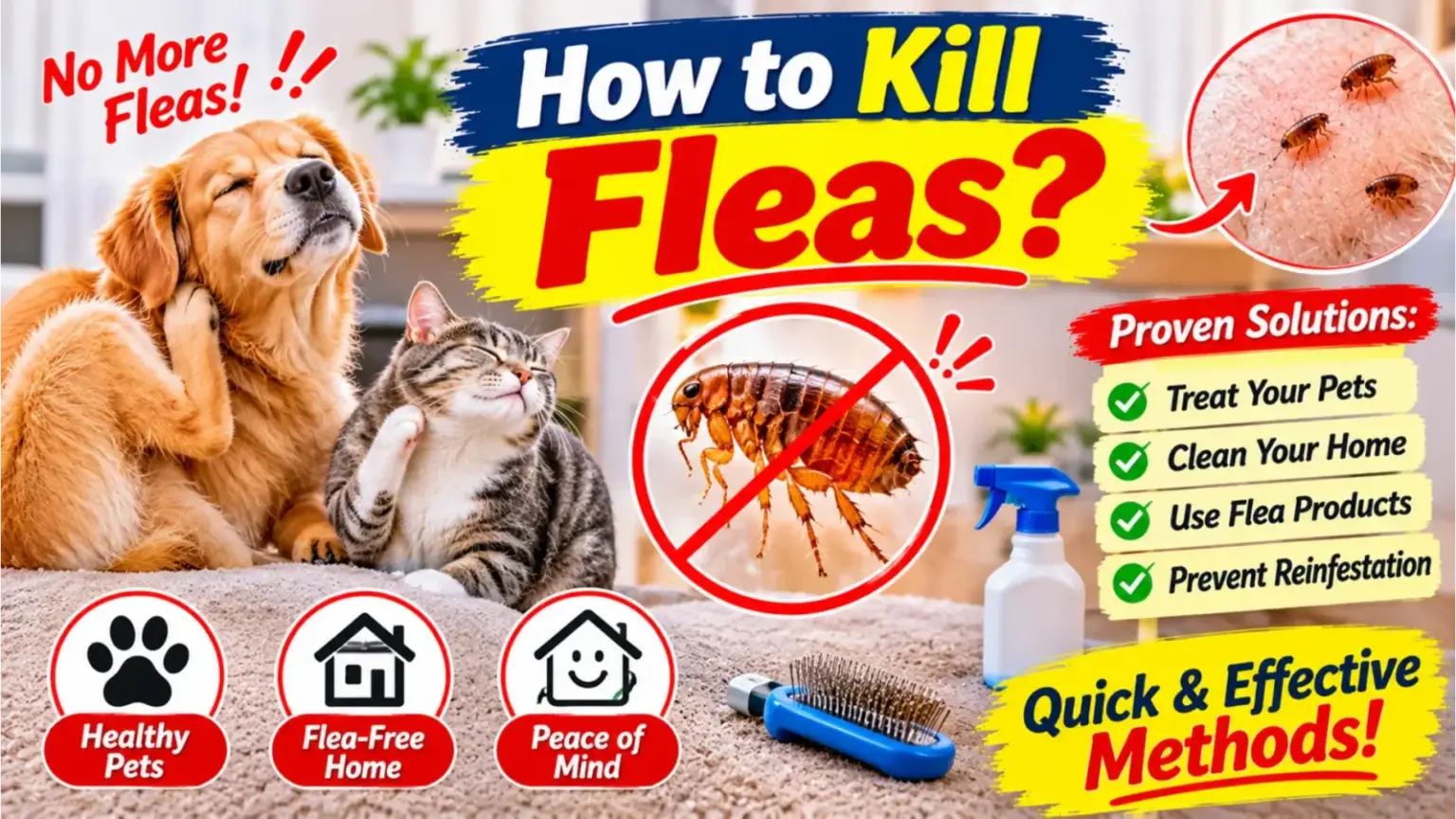
How to Kill Fleas on Pets, in Your Home, and Yard
Here is the short answer on how to kill fleas for good. Attack them in three places at the same time: on your pets, inside your home, and in the shady spots of your yard. Treat every dog and cat with a vet recommended flea product, vacuum floors and furniture daily, and wash pet bedding in hot water. Add a home spray that contains an insect growth regulator (IGR) to stop eggs and larvae from growing up. Keep going for at least several weeks, because new fleas keep hatching from cocoons that sprays cannot reach.
Fleas are tough because most of the population is not on your pet at all. This guide explains the flea life cycle, the treatments that actually work, natural options, a week by week plan, and the safety mistakes that can hurt pets, especially cats.
Why Fleas Are So Hard to Kill
Adult fleas live on your pet, but they drop eggs everywhere the pet goes. Washington State University’s PestSense notes that a typical flea population in a home is about 50% eggs, 35% larvae, 10% pupae, and only 5% adult fleas. If you only kill the adults you can see, the other 95% keep developing in your carpet, couch, and pet bed.
| Life stage | Where it lives | How long | What kills it |
|---|---|---|---|
| Egg | Falls off pet onto floors, bedding, furniture | Hatches in about 2 to 14 days | Vacuuming, washing, IGRs |
| Larva | Deep in carpet, cracks, pet beds, shady soil | About 5 to 20 days | Vacuuming, washing, IGRs, insecticides |
| Pupa (cocoon) | Carpet base, under furniture, in debris | Days to months | Vacuuming; it resists most sprays |
| Adult | On the pet, jumping to people | Weeks on a host | Pet flea products, insecticides, vacuuming |
The pupa stage is the main reason infestations drag on. The University of Kentucky notes that pupae stay inside their silk cocoons for 1 to 4 weeks, and the cocoon protects them from insecticides. The University of Florida says the full cat flea life cycle usually lasts 30 to 75 days, depending on temperature and humidity.
Signs You Have Fleas
- Scratching and biting: pets scratch, chew, or lick, often near the tail, belly, or neck.
- Flea dirt: tiny black specks in fur or bedding. Place them on a damp white paper towel. If they smear reddish brown, it is digested blood.
- Live fleas: small, dark, fast moving insects in the fur, especially when you part the hair or use a flea comb.
- Bites on people: small, itchy red bumps, often in clusters around ankles and lower legs.
- Hair loss or red skin: some pets develop flea allergy dermatitis.
- Fleas after vacation: returning to an empty home and getting bitten is a classic sign that pupae hatched while you were away.
Step 1: Kill Fleas on Your Pets
Pets are the flea factory. Purdue Extension describes effective flea control as a two pronged approach: kill adult fleas on dogs and cats, and target the breeding sites where immature fleas develop.
Use a Vet Recommended Flea Product
Modern flea products are the backbone of control. University of Wisconsin entomologists note that topical, oral, or collar products generally give better flea control than shampoos, dips, powders, or sprays. Common options include:
| Type | How it works | Notes |
|---|---|---|
| Oral chews or tablets | Fleas die after biting the pet | Fast acting; ask your vet which fits your pet |
| Topical spot on | Applied to skin between shoulder blades | Avoid bathing too often, which can shorten effect |
| Flea collar | Releases insecticide or IGR over months | Choose vet approved, species specific collars |
| Flea shampoo or bath | Kills fleas on contact | Little lasting effect; use alongside a long acting product |
| Flea comb | Physically removes fleas and eggs | Great for monitoring; dip in soapy water |
Treat every dog and cat in the home, even pets that do not seem itchy. One untreated pet keeps the cycle going.
Critical Safety Rule: Never Use Dog Products on Cats
Many dog flea products contain permethrin, which is highly toxic and can be fatal to cats. PetMD warns that cats can also be poisoned by grooming a dog that was recently treated. Only use products labeled for the exact species and weight of your pet. If a cat is exposed to a dog product, call a veterinarian right away.
Comb and Bathe for Quick Relief
A fine toothed flea comb removes adults and flea dirt. Dip the comb in a cup of soapy water to drown the fleas. A gentle bath can knock down fleas on a heavily infested pet, but follow your vet’s advice on timing with topical treatments.
Step 2: Kill Fleas in Your Home
Vacuum Every Day
Vacuuming is one of the best ways to kill fleas. In an Ohio State University study, vacuuming killed an average of 96% of adult fleas and 100% of younger fleas. The University of Kentucky adds that vibrations from vacuuming encourage fleas to leave their protective cocoons sooner, which exposes them to treatments.
- Vacuum carpets, rugs, couches, chair cushions, pet resting spots, and along baseboards.
- Move furniture and vacuum underneath.
- Vacuum daily during treatment, or at least every other day.
- Seal and throw out the vacuum bag or empty the canister outside after each session.
Wash Bedding and Fabrics
Wash pet bedding, throw blankets, pillow covers, and your own bedding if pets sleep there. Use the hottest water safe for the fabric and dry on high heat. Replace heavily infested pet beds if they cannot be washed.
Steam Clean Carpets and Upholstery
Steam cleaning reaches deep into fibers and the heat can kill flea stages. It works best after a thorough vacuum. Check that your carpet and furniture can handle steam.
Use a Home Spray With an IGR
Insect growth regulators like methoprene and pyriproxyfen stop eggs and larvae from becoming adults. The University of Kentucky notes the most effective home flea sprays combine an adult killing ingredient with an IGR. Spray carpets, under furniture, and pet resting areas, following the label. Keep pets and people off treated areas until dry.
What About Flea Bombs?
Total release foggers, or bug bombs, spread insecticide through the air, but they often miss fleas hiding deep in carpet and under furniture, and they do not affect pupae inside cocoons. Directed sprays with an IGR are usually more effective. If you do use a fogger, follow the label exactly, remove pets, cover fish tanks, and turn off pilot lights and other ignition sources.
Step 3: Kill Fleas in Your Yard
Outdoor fleas live in shady, humid, protected spots, not in sunny open lawns. Focus on places your pet rests:
- Under decks, porches, and shrubs
- Dog runs, kennels, and dog houses
- Crawl space entrances and shady corners of the yard
Rake up leaves and debris, mow regularly, and let sunlight reach soil where possible. If outdoor treatment is needed, WSU notes that products with the IGR pyriproxyfen last longer outdoors than those with methoprene, because pyriproxyfen holds up better in sunlight. Beneficial nematodes are a natural option for moist soil areas. Discourage wildlife such as raccoons, opossums, and stray cats, which can carry fleas into your yard.
Natural Ways to Kill Fleas
| Method | Does it work? | Notes |
|---|---|---|
| Vacuuming | Yes, strongly | Kills most adults and immature fleas |
| Hot washing and drying | Yes | Use the hottest safe setting |
| Steam cleaning | Yes, as a helper | Best after vacuuming |
| Flea comb and soapy water | Yes, for removal | Does not stop new fleas hatching |
| Diatomaceous earth (food grade) | Some effect | Apply lightly, avoid breathing dust, vacuum after |
| Light and soapy water traps | Catches some adults | Useful for monitoring, not a cure |
| Salt or baking soda on carpet | Little evidence | Mainly helps by drying; vacuum well |
| Essential oils | Unreliable | Several oils can be toxic to cats and dogs; ask a vet first |
| Brewer’s yeast, garlic, ultrasonic collars | No | Not proven; garlic can be toxic to pets |
Texas A&M AgriLife Extension notes that tests showed brewer’s yeast does not protect pets from fleas. The University of Wisconsin also lists vitamin B1, yeast supplements, herbal collars, and ultrasonic devices as ineffective.
How Long It Takes to Kill Fleas
Expect to see fewer fleas within days, but full control usually takes several weeks to a few months. Here is a typical timeline:
| Time | What to expect | What to do |
|---|---|---|
| Day 1 | Start of treatment | Treat all pets, vacuum, wash bedding, spray IGR |
| Week 1 | Fewer fleas on pets; some new fleas still appear | Vacuum daily, keep pets on schedule |
| Weeks 2 to 4 | Pupae hatch and jump on treated pets, where they die | Keep vacuuming; do not stop pet treatment |
| Weeks 4 to 8 | Flea numbers drop sharply | Repeat home spray if the label allows |
| Ongoing | Prevention phase | Monthly pet treatment year round |
Seeing a few fleas after treatment is normal. They are usually newly hatched adults emerging from cocoons. As long as pets stay treated, those fleas die before they can lay many eggs.
How to Kill Fleas on Humans and in Your Bed
Cat fleas bite people but do not live on human skin long term. To stop bites:
- Shower and wash clothes after spending time in infested areas.
- Wash bedding in hot water and dry on high heat.
- Vacuum the mattress, bed frame, and carpet around the bed.
- Keep pets off beds until the infestation is under control.
- Wear long socks tucked into pants while working in infested rooms.
Wash bites with soap and water and avoid scratching. See a doctor if bites look infected or you have a strong reaction.
Special Cases: Puppies, Kittens, and Sensitive Pets
Very young, old, pregnant, nursing, or sick pets need extra care, because many flea products have minimum age and weight limits. Talk to your veterinarian before treating them. In the meantime:
- Use a flea comb daily and dip fleas into soapy water.
- Focus hard on cleaning the home: vacuum daily and wash bedding often.
- Treat other adult pets in the home with safe, labeled products so they do not reinfest the young ones.
- Watch for pale gums, weakness, or lethargy, which can signal anemia in tiny animals with heavy infestations.
Killing Fleas in Cars, Carriers, and New Homes
Fleas can hide anywhere pets ride or rest. Vacuum car seats, floor mats, and cargo areas, and wash or replace fabric seat covers and blankets. Clean pet carriers and crates with hot soapy water and let them dry in the sun.
When moving into a home that sat empty, fleas may be waiting as pupae. WSU notes that in empty homes, the most effective and safest first step is thorough vacuuming, repeated a few days later with a new vacuum bag. Ask the landlord or seller whether the previous occupants had pets, and treat before moving your pets in.
Health Risks of Fleas
Fleas are more than an itch. They can cause flea allergy dermatitis in pets, spread tapeworms when pets swallow infected fleas while grooming, and cause anemia in puppies, kittens, or small animals with heavy infestations. In some regions, fleas on wildlife can carry diseases that affect people. Fast treatment protects both pets and family.
Why Fleas Keep Coming Back
- One pet was skipped: every animal in the home needs treatment.
- Treatment stopped too soon: pupae can hatch weeks later.
- No IGR used: eggs and larvae keep maturing.
- Not enough vacuuming: immature fleas stay in carpet.
- Wildlife or strays outdoors: new fleas keep arriving.
- Wrong or expired product: some fleas may tolerate older products; ask your vet about alternatives.
- Too frequent bathing: it can reduce the effect of topical treatments.
When to Call a Professional
Call a licensed pest control company if fleas persist after six to eight weeks of consistent treatment, if you have a large home or many pets, or if you are moving into a home that was empty and flea infested. Pros can treat crawl spaces, yards, and hard to reach areas. Always see your veterinarian for pet treatment, especially for young, old, pregnant, nursing, or sick animals.
How to Prevent Fleas
- Keep pets on a vet recommended flea preventive year round.
- Vacuum often and wash pet bedding weekly.
- Groom pets with a flea comb to catch problems early.
- Keep the yard tidy and limit shady debris.
- Seal gaps where wildlife can nest under decks or in crawl spaces.
- Check pets after visits to kennels, parks, or homes with other animals.
Frequently Asked Questions
What kills fleas instantly?
Vacuuming, a flea comb with soapy water, and some fast acting oral pet medicines kill adult fleas quickly. To end an infestation, you still need ongoing pet treatment, an IGR, and repeated vacuuming.
Does dish soap kill fleas?
Soapy water can kill fleas on contact, which is why it works with a flea comb or bath. It has no lasting effect, so new fleas will return without a proper flea preventive.
How long can fleas live without a host?
It depends on the life stage and conditions. Pupae can wait in cocoons for weeks or months, which is why empty homes can have big outbreaks when people or pets return.
Can fleas live in my bed?
Fleas can fall into beds where pets sleep, but they prefer to live on animals. Wash bedding hot, vacuum the mattress, and keep pets off the bed during treatment.
Do flea bombs work?
They can kill some exposed adults, but they often miss fleas under furniture and deep in carpet and do not affect pupae. Directed sprays with an IGR plus vacuuming usually work better.
Does vinegar kill fleas?
There is little evidence that vinegar kills fleas or prevents infestations. Stick with proven methods.
Is diatomaceous earth safe for killing fleas?
Food grade diatomaceous earth can help dry out fleas, but avoid breathing the dust and keep it away from pets’ faces. Apply a thin layer, let it sit, then vacuum.
Why do I still see fleas after treating my pet?
New adults keep hatching from cocoons in the home for several weeks. Keep treating pets and vacuuming, and the numbers will fall.
Can I get rid of fleas without chemicals?
Vacuuming, hot washing, steam cleaning, and combing can reduce fleas a lot, but most infestations also need a pet flea product to stop the cycle. Ask your vet about the safest option.
Do indoor cats need flea prevention?
Fleas can hitch a ride indoors on people, other pets, or wildlife. Many vets recommend prevention for indoor cats too, especially in homes with dogs.
How often should I vacuum to kill fleas?
Vacuum daily during active treatment, focusing on pet resting areas, and keep vacuuming at least every other day for several weeks after you stop seeing fleas.
Final Thoughts
Knowing how to kill fleas comes down to treating the whole cycle, not just the adults you see. Treat every pet with a vet approved, species specific product, vacuum daily, wash bedding hot, and use an IGR spray in the home. Clean up shady yard spots and keep going for several weeks while the last cocoons hatch. Then stay on year round prevention so fleas never get a foothold again.
Keep reading
 Garden
How to Get Rid of Weeds Naturally: Methods That Work
 Home Safety
How to Baby Proof a Fireplace: Complete Safety Guide
More in Pest Control →