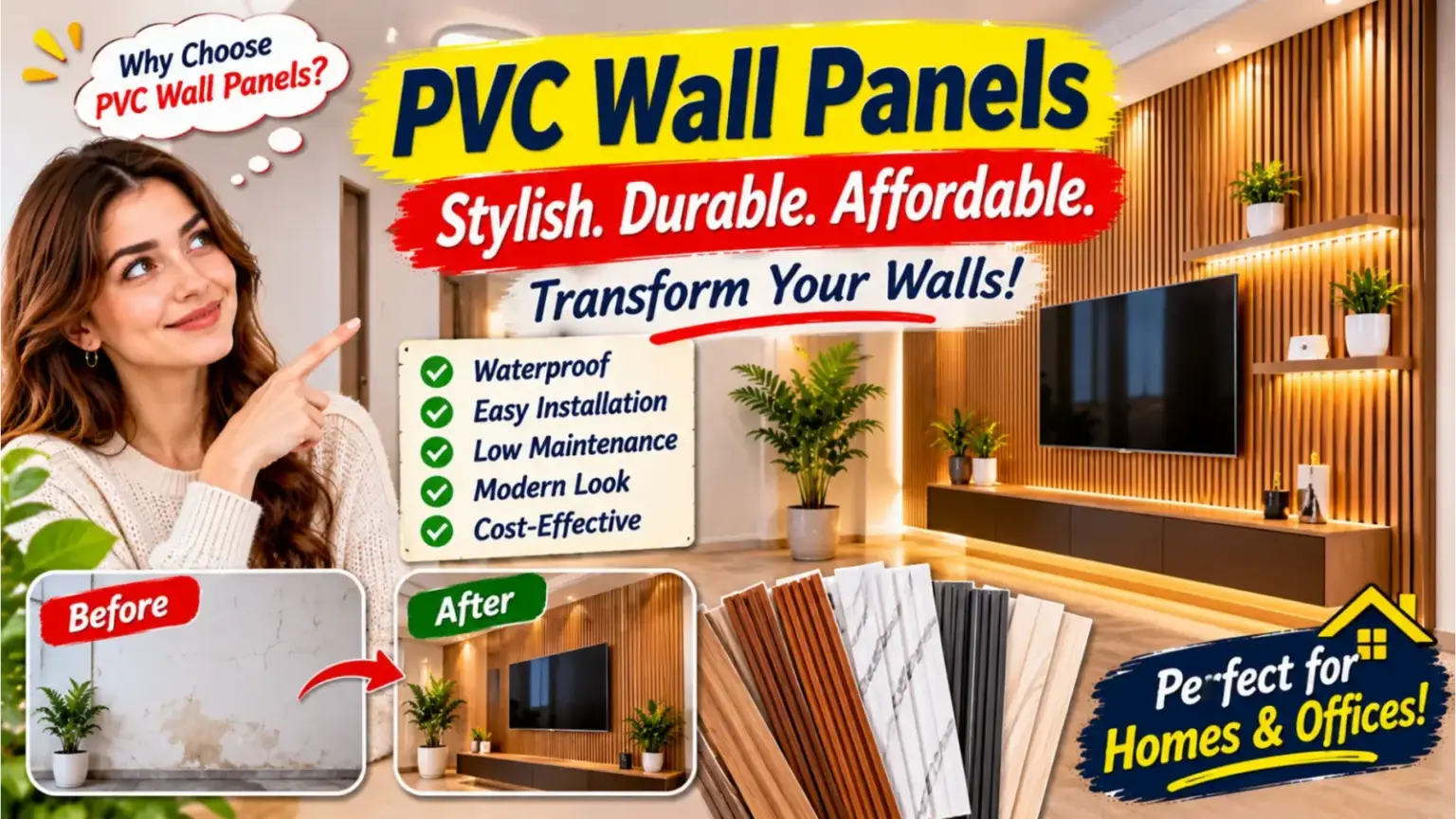
PVC Wall Panels: Types, Costs, Pros, Cons, and Installation
PVC wall panels are lightweight plastic panels made from polyvinyl chloride that cover walls and ceilings with a waterproof, easy to clean surface. They come in plain white utility boards, tongue and groove planks, large shower panels, and decorative styles that look like tile, marble, wood, or 3D textures. They work best in bathrooms, laundry rooms, basements, garages, and commercial spaces because they resist water, mold, and stains. Material costs often start around $2 to $10 per square foot, and most panels install with adhesive, screws, or clips and matching trim. Avoid using standard panels right next to stoves or heaters, since most PVC starts to soften around 140°F (60°C).
This guide explains the main types, where to use them, how they compare with tile, drywall, FRP, and wood, what they cost, fire and safety facts, step by step installation, cleaning, and common mistakes.
PVC Panels at a Glance
| Feature | Details |
|---|---|
| Material | Polyvinyl chloride (vinyl), often with hollow cores or ribs |
| Water resistance | Waterproof surface; ideal for wet and humid areas |
| Common sizes | Planks about 8 to 16 in wide; sheets up to 4 x 8 ft or larger |
| Finishes | White, solid colors, wood look, marble look, tile look, 3D |
| Installation | Adhesive, screws or nails into furring, clips, and trim |
| Heat limit | Many panels soften around 140°F (60°C) |
| Typical material cost | About $2 to $10+ per sq ft |
| Best uses | Bathrooms, showers, laundry rooms, basements, garages, barns, commercial kitchens |
Types of PVC Wall Panels
Utility and Liner Panels
These are plain white or gray hollow core panels, often 12 to 16 inches wide with tongue and groove edges and hidden screw flanges. Brands like Trusscore, Palram, and others make them for garages, basements, barns, car washes, and food processing areas. They are tough, washable, and fast to install over studs or furring strips.
Bathroom and Shower Panels
Wide, thin PVC sheets or interlocking planks designed as a tile alternative in showers and tub surrounds. Many have tile, marble, or stone patterns and click together with sealed joints. They are popular for quick bathroom updates because they can often go over sound existing tile.
Decorative and 3D Panels
Lightweight molded panels with waves, geometric shapes, or textures. They create feature walls in living rooms, bedrooms, and shops. Many can be painted.
Wood Look and Slat Panels
PVC or composite planks printed or embossed to look like wood. Some are fluted or slatted for a modern look in damp areas where real wood would struggle.
Marble Look Sheets (UV Boards)
Glossy PVC sheets with a printed marble pattern and often a UV cured coating. They imitate stone for accent walls and backsplashes at lower cost, though cheaper versions can scratch and fade.
Ceiling Panels
Many PVC planks work on ceilings too, especially in bathrooms, porches, basements, and garages, where they resist moisture and are easy to clean.
WPC and SPC Panels
Wood plastic composite (WPC) and stone plastic composite (SPC) panels mix PVC with wood flour or stone powder. They are denser and more rigid than standard hollow PVC panels and often look more natural.
Where to Use PVC Panels
| Area | Good fit? | Notes |
|---|---|---|
| Bathrooms and showers | Excellent | Waterproof and easy to clean; seal joints and edges |
| Laundry and mudrooms | Excellent | Handles splashes and humidity |
| Basements | Very good | Resists moisture and mold; fix leaks first |
| Garages and workshops | Very good | Bright, washable, and tough |
| Barns and animal areas | Very good | Pressure washable utility panels |
| Commercial kitchens and food plants | Good with approved panels | Choose panels that meet food safety rules |
| Kitchen backsplash | With caution | Keep away from direct burner heat |
| Living rooms and bedrooms | Good for feature walls | Choose higher quality decorative panels |
| Behind stoves, fireplaces, heaters | Not recommended | Heat can warp or discolor panels |
| Exterior walls in direct sun | Not for interior panels | Use products rated for exterior use |
Pros and Cons of PVC Panels
| Pros | Cons |
|---|---|
| Waterproof surface | Softens and can warp near high heat |
| Resists mold, mildew, and stains | Can dent or scratch more than tile |
| Lightweight and fast to install | Some styles look plastic up close |
| Low maintenance and easy to clean | Damaged panels are hard to patch |
| Usually cheaper than tile | Cheaper panels may fade or yellow in strong sun |
| No grout lines to scrub (in most styles) | Plastic material is less eco friendly |
| Can cover old tile or damaged walls | Trapped moisture behind panels can cause hidden problems |
PVC Panels vs Other Wall Materials
| Material | Water resistance | Cost | DIY ease | Best for |
|---|---|---|---|---|
| PVC panels | Waterproof | Low to mid | Easy | Wet areas, utility spaces, quick updates |
| Ceramic or porcelain tile | Waterproof with proper backer | Mid to high | Hard | Showers, kitchens, luxury looks |
| Drywall and paint | Low (moisture resistant types help) | Low | Moderate | Dry living spaces |
| FRP panels | Very good | Low | Moderate | Commercial restrooms and kitchens |
| Acrylic shower panels | Waterproof | Mid | Moderate | Shower surrounds |
| Wood paneling | Low to moderate | Mid to high | Moderate | Living areas and warmth |
FRP (fiberglass reinforced plastic) is a common alternative in commercial spaces. PVC panels avoid the fiberglass dust created when cutting FRP and often install faster, while FRP sheets are usually glued directly to drywall or plywood.
How Much Do PVC Panels Cost?
Costs depend on the panel type, thickness, finish, and brand, plus trim, adhesive, and labor.
| Item | Typical range |
|---|---|
| Basic white utility panels | Low end of about $2 to $5 per sq ft |
| Decorative and shower panels | About $5 to $12 per sq ft |
| Premium marble look or thick panels | $10+ per sq ft |
| Trim, adhesive, and fasteners | Often $1 to $3 per sq ft extra |
| Professional labor | Often about $2 to $8 per sq ft |
| Shower surround (panels installed) | Often about $800 to $2,500 |
Panels usually cost much less than tile in showers because they need less labor, no backer board in many retrofit cases, and no grout. Prices vary by region and supplier, so compare several quotes.
Example Budget
Here is a hypothetical estimate. A 10 by 8 foot laundry room wall is 80 square feet. At $5 per square foot for panels, $2 per square foot for trim and adhesive, and $4 per square foot for labor, the total would be about $880. Doing it yourself would bring it closer to $560.
Fire Safety and Food Safety
PVC is a plastic, so fire performance matters. Quality panels are tested to ASTM E84 for flame spread and smoke. Some commercial liner panels are rated Class A. For example, Trusscore lists a Class A rating with a flame spread index of 10 and a smoke developed index of 380 for its Wall&CeilingBoard, and notes that panels must go over a fire rated assembly where local code requires one.
- Check the product’s ASTM E84 class and data sheet before buying.
- Panels do not replace drywall when a fire rated wall or ceiling is required, such as between a garage and living space.
- Panels do not replace the thermal barrier required over foam insulation.
- For food processing or commercial kitchens, choose panels listed as compliant with USDA, FDA, or local health rules.
Heat Limits
Standard PVC panels are not made for high heat. Many manufacturers list a service temperature of about 140°F (60°C). Keep panels away from cooktops, ovens, fireplaces, wood stoves, heaters, and hot light fixtures, and avoid dark panels on walls that get strong direct sun.
How Many Panels Do You Need?
- Measure each wall. Multiply wall width by height to get square feet.
- Subtract large openings. Deduct doors and big windows, but not small outlets.
- Divide by panel coverage. Find the coverage per panel or per box on the label. For example, a 16 inch wide by 8 foot panel covers about 10.7 square feet.
- Add waste. Add about 10 percent for cuts, mistakes, and pattern matching, and more for rooms with many corners.
- Count trim. Measure the linear feet of floor, ceiling, corner, and door and window edges to order trim pieces.
Buy all panels from the same batch when possible, since colors and printed patterns can vary slightly between production runs.
Tools and Materials
- PVC panels, plus about 10 percent extra for waste
- Matching trims: J trim, inside and outside corners, H joints, starter and finishing strips
- Panel adhesive recommended by the manufacturer, or screws for furring
- Furring strips if the wall is uneven or for utility panels
- Fine tooth saw, circular saw with a fine blade, or utility knife for thin panels
- Tape measure, level, chalk line, pencil
- Drill or driver, caulk gun
- Mold resistant silicone sealant made for plastics
- Safety glasses and gloves
How to Install PVC Panels
Always follow your panel maker’s instructions, since methods vary. These are the general steps.
- Let panels acclimate. Store panels flat in the room so they reach room temperature before cutting. Many makers suggest about 24 hours.
- Prepare the wall. Fix leaks and mold first. Remove loose paint and wallpaper. The surface should be clean, dry, and sound.
- Choose a mounting method. Use adhesive on flat, solid walls, or install furring strips about 12 to 16 inches apart on uneven walls and in utility spaces.
- Install the trim. Fit starter trim or J trim at the floor, ceiling, and corners, keeping it level and leaving room for movement.
- Cut the first panel. Measure the height, subtract the expansion gap, and cut with a fine tooth blade.
- Fit the first panel. Slide it into the trim, check plumb with a level, and fasten through the hidden flange or press into adhesive.
- Continue across the wall. Lock each tongue fully into the groove and fasten. Do not overtighten screws, which can distort panels.
- Cut openings. Mark and cut holes for outlets, switches, and pipes. Turn off power before working around electrical boxes.
- Fit the last panel. Trim the final panel to width and slide it into the end trim.
- Seal. In wet areas, seal joints, corners, and edges with a mold resistant silicone made for PVC.
Leave Room for Expansion
PVC expands and contracts with temperature. Many manufacturers, such as in this EZ Liner installation guide, specify small gaps at panel ends and edges, such as about 1/4 inch at trim on long panels or about 3 mm at the perimeter of sheet panels, and installing in cold conditions may need wider gaps. Panels fitted too tightly can buckle when the room warms up.
Installing Over Old Tile
Many shower panels can go over existing tile if the tile is firmly attached, flat, clean, and dry. Remove soap residue and use the adhesive the panel maker recommends. Loose or cracked tile should be removed first.
Cleaning and Maintenance
- Wipe with warm water and mild dish soap and a soft cloth or sponge.
- For bathrooms, use non abrasive bathroom cleaners labeled safe for plastic.
- Avoid scouring pads, harsh solvents, and acetone, which can dull or damage the surface.
- Utility panels in garages and barns can often be hosed or pressure washed if the maker allows it.
- Check silicone seals every year or two and replace any that are cracked or moldy.
- Keep the room ventilated to reduce condensation behind and on the panels. Run a bathroom fan during and after showers.
Can You Paint PVC Panels?
Many decorative and 3D PVC panels can be painted. Clean and lightly scuff the surface, use a primer made for plastic, and finish with acrylic or latex paint. Do not paint shower panels inside the wet zone, since paint will not hold up to constant water and scrubbing.
Choosing Quality Panels
- Thickness and core: thicker panels with internal ribs or trusses resist dents and sagging better.
- Surface finish: printed patterns should be protected by a clear wear layer or UV coating.
- Joint design: tight tongue and groove or click joints keep water out.
- Trim system: matching trims give a clean, sealed finish.
- Test data: look for ASTM E84 fire ratings, mold resistance testing, and food safety compliance if needed.
- Warranty: compare residential and commercial warranty terms.
- Recycled content and low VOC: some brands publish environmental certifications.
Design Ideas
- Large format marble look panels for a seamless shower surround.
- Bright white utility panels in a garage workshop for better light reflection.
- Wood look slat panels on a bathroom feature wall.
- 3D wave panels painted in a bold color behind a bed or TV.
- Tile look panels in a laundry room for a classic look without grout.
- PVC ceiling planks on a covered porch or in a damp basement.
Common Mistakes to Avoid
- Installing panels without fixing leaks or mold behind them.
- Skipping acclimation and expansion gaps.
- Using the wrong adhesive, which can stain or fail.
- Overtightening screws and causing waves.
- Placing standard panels behind a stove or heater.
- Leaving edges and corners unsealed in showers.
- Assuming panels meet fire code without checking ratings.
Frequently Asked Questions
Are PVC panels waterproof?
The panel surface is waterproof. To keep water out of the wall, seal joints, edges, and penetrations correctly.
How long do PVC wall panels last?
Quality panels installed correctly can last many years, often decades in utility spaces. Cheaper decorative panels may fade or scratch sooner.
Can PVC panels be installed over drywall?
Yes. They are often glued to drywall or screwed through furring strips into studs. In wet areas, the wall behind should be sound and dry.
Can you install PVC panels over tile?
Many shower panels can go over clean, flat, well attached tile using the recommended adhesive.
Are PVC panels safe?
Panels are generally safe for interior use when installed as directed. Choose fire rated products, keep them away from heat sources, and follow local codes.
Do PVC panels need ventilation?
Yes, good ventilation is still important in bathrooms and basements to control humidity and condensation.
Can I use PVC panels in a kitchen?
Yes, in areas away from direct heat. Avoid installing standard panels right behind gas or electric burners.
Are PVC panels better than tile?
Panels are cheaper, faster, and easier to clean. Tile is more heat resistant, harder to scratch, and usually feels more premium.
How do you cut PVC panels?
Use a fine tooth saw, a circular saw with a fine blade, or score and snap thin panels with a utility knife.
Are PVC panels good for garages?
Yes. Utility panels are washable, moisture resistant, and brighten the space. Check fire code rules for walls shared with living areas.
Do PVC panels insulate?
They add a little insulation, but they are not a substitute for wall insulation.
Can PVC panels be recycled?
PVC can be recycled in some programs, but options vary by area. Ask your local recycler or the manufacturer.
Final Thoughts
PVC wall panels are one of the fastest, most budget friendly ways to create waterproof, easy to clean walls in bathrooms, laundry rooms, basements, garages, and commercial spaces. Choose a quality panel with the right fire rating, prepare a dry, sound wall, leave expansion gaps, seal wet areas carefully, and keep panels away from strong heat. Done right, PVC panels deliver a clean, modern finish that lasts for years with very little upkeep.
Keep reading
 Interior & Decor
9×12 Area Rugs: Room Fit, Placement, Materials, and Prices
 DIY Tools & Measurements
What Is a Linear Foot? Meaning, Formula, and Examples
More in Walls, Paint & Finishes →