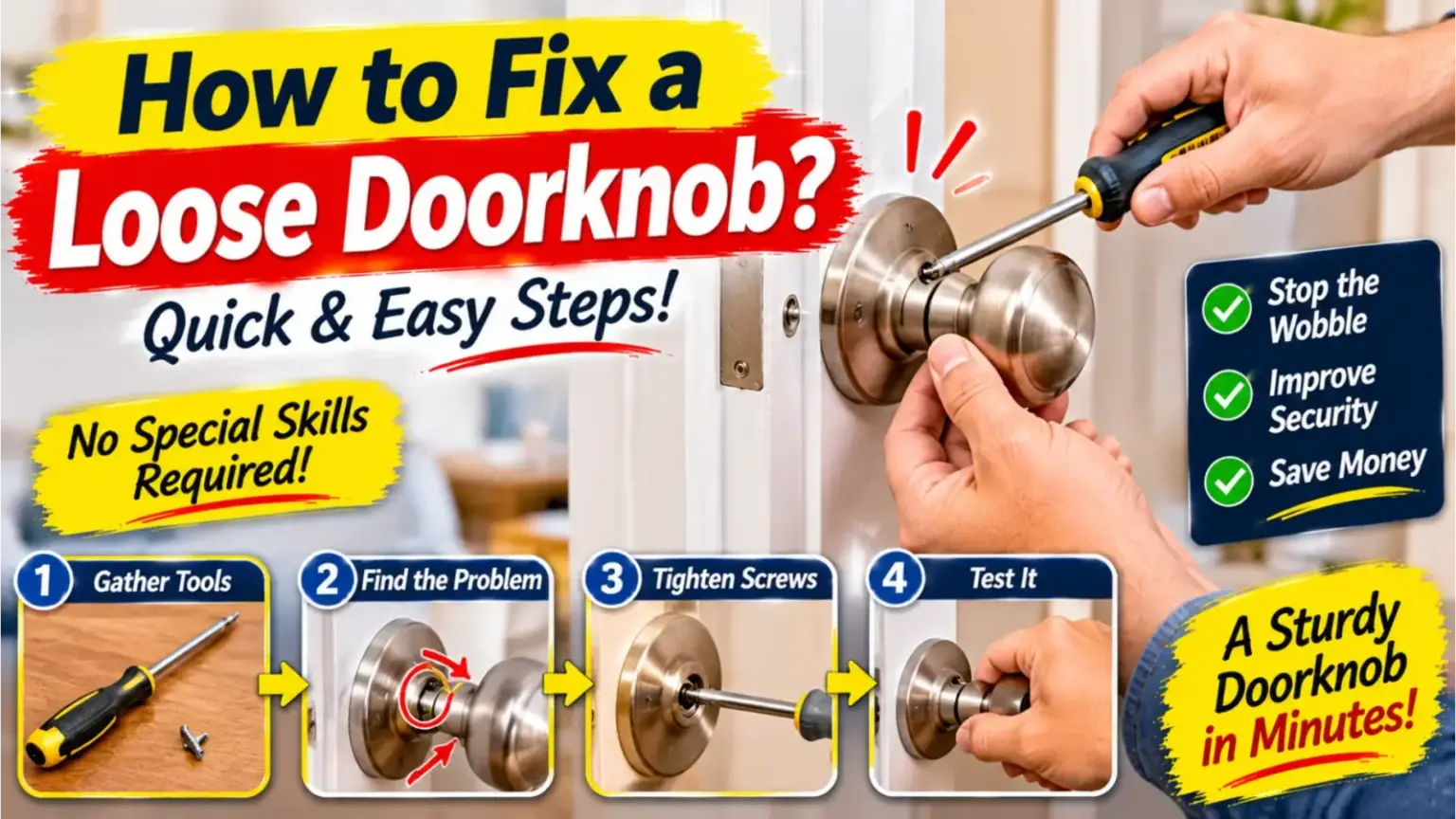
How to Fix Loose Doorknob: Easy Fixes for Every Type
Here’s the quick answer on how to fix loose doorknob problems: find the screws and tighten them. On most modern knobs, two screws sit on the inside rose (the round plate against the door). Tighten them evenly with a Phillips screwdriver. If you can’t see any screws, press the small release pin on the knob’s neck, pull the knob off, pop off the cover plate, and tighten the hidden screws underneath. Older knobs usually have a small set screw on the side of the knob that needs tightening against the spindle.
The fix usually takes 5 to 15 minutes. This guide covers every type of doorknob and lever, what to do when screws keep loosening or spin without tightening, how to fix a knob that turns without opening the door, and when it’s time to replace it instead.
Why Doorknobs Get Loose
- Daily use: turning, pulling, and slamming slowly back the screws out.
- Wood movement: doors expand and shrink with humidity, loosening screws.
- Stripped screw holes in the door that no longer grip the screws.
- A loose set screw on older knobs, letting the knob slide on its spindle.
- Worn internal parts, like a broken return spring in a lever handle.
- Poor installation, such as uneven tightening or the wrong screw length.
First, Identify Your Doorknob Type
| What You See | Knob Type | How It’s Held On |
|---|---|---|
| Two screws on the inside rose | Modern knob with exposed screws | Through-bolts that connect both sides |
| Smooth rose with a tiny hole or slot on the neck | Modern knob with hidden screws | Detent pin holds the knob; screws are under a cover |
| Small screw on the side of the knob’s neck | Vintage or mortise knob, or some levers | Set screw (grub screw) on a threaded or square spindle |
| Lever handle that droops | Lever with worn spring or loose screws | Screws, set screw, or internal spring cassette |
Always work from the inside of the door. That’s where the screws, set screws, and release pins are located.
Tools You’ll Need
- Phillips and flat-head screwdrivers
- Small Allen key (hex wrench) set for set screws
- Paperclip, small nail, or thin screwdriver for detent release holes
- Wood glue and toothpicks or wooden golf tees for stripped holes
- Blue (removable) threadlocker, optional, for screws that keep loosening
- Longer screws, optional, if the originals are too short
How to Fix a Loose Doorknob With Visible Screws
- Hold the outside knob steady so the assembly lines up.
- Find the two screws on the inside rose or base plate.
- Tighten each screw a little at a time, switching back and forth, so the plate pulls in evenly.
- Stop when snug. Overtightening can make the knob stiff or keep the latch from springing back.
- Test the knob from both sides and check that the latch moves freely.
If the knob still wobbles after the screws are tight, the rose may not be flush with the door, the screws may be stripped, or the latch may not be lined up. See the sections below.
How to Fix a Loose Doorknob With No Visible Screws
Many modern knobs hide their screws for a clean look. The trick is finding the detent, a small spring-loaded catch that holds the knob on.
- Look at the neck of the inside knob for a tiny hole or slot. It’s often on the underside. You may need to turn the knob to line it up.
- Press the detent with a paperclip, small nail, or thin flat screwdriver while gently pulling the knob off.
- Remove the cover rose. Look for a small notch and pry gently with a flat screwdriver, or twist it counterclockwise if it’s threaded.
- Tighten the mounting screws now visible on the base plate, alternating sides.
- Snap or twist the rose back on.
- Slide the knob back onto the spindle and turn it until the detent clicks into place.
Bob Vila notes that the detent access is usually a tiny slot or hole on the lock side of the knob, and if you can’t find one, look for a recessed screw that loosens with an Allen wrench instead.
The Home Depot guide also explains that a small pinhole or slot instead of screw holes means the knob has a hidden detent, which you push in with a flat screwdriver or paperclip to release it.
If the Cover Plate Won’t Come Off
Some cover roses snap on tightly. Push the knob in toward the door while pulling the rose out at the notch or dimples. On threaded roses, wrap a rubber jar opener or cloth around it for grip and turn counterclockwise.
How to Fix a Loose Vintage Doorknob With a Set Screw
Older and antique knobs, including glass and crystal knobs, often thread onto a square metal bar called a spindle. A small set screw on the knob’s neck locks it in place. When the set screw loosens, the knob slides or spins.
- Loosen the set screw on one knob with a flat screwdriver or Allen key.
- Hold the opposite knob firmly.
- Turn the loose knob clockwise to screw it further onto the threaded spindle until it’s snug against the rose, with just enough room for smooth turning.
- Line up the set screw with one of the flat sides of the spindle.
- Retighten the set screw firmly so it presses against the flat side.
If the spindle is worn smooth or the knob still slides, add a thin knob shim or washer between the knob and rose, or replace the spindle. Replacement spindles are inexpensive and sold in common lengths.
Watch for Left-Hand Threads
Some knobs and set screws, especially in older or European hardware, use reverse (left-hand) threads. If turning clockwise loosens instead of tightening, try the other direction.
How to Fix a Loose or Floppy Lever Handle
Lever handles get loose in two ways: the whole handle wobbles, or the lever droops and won’t spring back up.
Wobbly Lever
- Look for a set screw under the lever, often a tiny hex screw.
- Tighten it with the right Allen key.
- If there’s no set screw, look for a detent hole and remove the lever, then tighten the mounting screws under the rose like a hidden-screw knob.
Droopy or Floppy Lever
A lever that hangs down usually has a weak or broken return spring.
- Check the lever direction. Some levers are “handed” (left or right) and droop if installed backward. Many can be switched with a small button or screw.
- On UK and European backplate levers, the spring cassette can often be replaced.
- On most US tubular levers, the spring isn’t sold separately, so replacing the handle set is usually faster.
Schlage, Kwikset, and Other Brands
Big brands like Schlage and Kwikset often use hidden-screw designs with a detent or a small release tool included in the box. Some Schlage knobs and levers have the release hole on the underside of the neck. If you have the manual or model number, check the brand’s website for exact steps. Kwikset also offers some knobs that tighten from the inside with no tools needed.
How to Fix Stripped Screw Holes
If the screws spin and never tighten, the wood around them is stripped.
- Remove the screw.
- Dip toothpicks, wooden matchsticks, or a wooden golf tee in wood glue.
- Pack them into the hole until it’s snug.
- Snap or cut them flush with the door surface.
- Let the glue dry, ideally overnight, following the glue label.
- Drive the screw back in. It will bite into the fresh wood.
Other options: use a slightly longer screw of the same thickness, or fill the hole with a wood dowel and glue for a stronger repair. On hollow-core doors, make sure longer screws won’t poke through.
Why Do Doorknob Screws Keep Loosening?
- Uneven tightening leaves the plate under stress.
- Constant slamming or pulling vibrates screws loose.
- Worn or stripped screws don’t hold well.
- The latch isn’t aligned, so the knob gets forced each time.
Fixes that last: tighten screws evenly, add a drop of blue (removable) threadlocker to metal set screws and machine screws, repair stripped holes, and check that the door closes without force. Avoid red (permanent) threadlocker, which makes future removal very hard.
Doorknob Spins but Won’t Open the Door
If the knob turns freely but the latch doesn’t move, the problem is usually inside the mechanism.
| Cause | What to Check | Fix |
|---|---|---|
| Spindle slipped out of the latch | Knob turns with no resistance | Remove the knob and reseat the spindle through the latch |
| Set screw loose on vintage knob | Knob slides off the spindle | Tighten the set screw on a flat side of the spindle |
| Broken latch or cam | Spindle turns but latch stays out | Replace the latch |
| Worn or rounded spindle | Square edges are worn smooth | Replace the spindle |
| Broken internal spring | Knob feels floppy | Replace the knob set |
If You’re Locked Out or Stuck Inside
If the knob is broken and the door is latched shut, slide a thin putty knife or old plastic card between the door and frame to push the latch back, if it’s an angled latch. Privacy locks usually have an emergency release hole on the outside knob. If nothing works, remove the door hinge pins (on an inward-swinging door) or call a locksmith.
Fixing the Latch and Strike Plate
A loose knob sometimes comes from a latch problem.
- Tighten the two latch screws on the edge of the door.
- Check the strike plate on the frame. If the latch rubs or misses the hole, loosen the strike plate screws and shift it, or file the opening a little larger.
- Tighten the door hinges. A sagging door can push the latch out of line and strain the knob.
How to Fix a Doorknob That Fell Off
- Find all the parts: both knobs, the spindle, screws, and rose.
- Slide the outside knob back in so its spindle passes through the latch.
- Fit the inside knob and line up the screw holes or set screw.
- Tighten the screws or set screw and test.
If a part is broken or missing, take the old knob to a hardware store to match it, or replace the full set.
Exterior and Front Door Knobs
A loose front door knob or handleset is worth fixing quickly, since it can affect security. Tighten the inside screws, check the deadbolt screws while you’re there, and confirm the strike plate uses long screws that reach the wall framing. If the lock cylinder is loose or the knob still wobbles after tightening, consider replacing it with a sturdier keyed set.
Loose Knobs on Different Door Types
- Hollow-core interior doors: the wood around the hole is thin. Don’t overtighten, and use a wood filler or a door repair plate if the area is cracked.
- Mortise locks: older homes and some front doors have a box lock inside the door. The knob usually attaches with a set screw on a spindle. Tighten the set screw, and check the screws holding the lock body on the door edge.
- French and patio doors: narrow frames often use special handles with short screws. Replacement screws must match the original length.
- Metal doors: screws thread into metal, so stripped holes may need a slightly larger screw or a threaded insert.
How to Tighten a Loose Cabinet or Drawer Knob
Small knobs on cabinets, drawers, and dressers loosen too. The fix is simpler than a door knob.
- Open the drawer or door and find the screw on the back.
- Hold the knob on the front so it doesn’t spin.
- Tighten the screw with a screwdriver until snug.
- If it keeps loosening, add a drop of blue threadlocker to the screw threads, or a small lock washer.
- If the hole is stripped, fill it with glued toothpicks and let it dry, or use a slightly longer screw.
For knobs with a built-in threaded post, twist the whole knob clockwise while holding the nut on the back.
Repair or Replace?
| Repair It If | Replace It If |
|---|---|
| Screws just need tightening | Internal springs or the latch are broken |
| Holes are stripped but the door is solid | The knob still wobbles after every fix |
| A set screw or spindle is loose | Parts are cracked, corroded, or missing |
| You love the vintage look | You want better security or a new style |
Replacing a standard interior knob is a simple DIY job on a pre-drilled door. A handyman or locksmith can also do it, and pricing varies by area and the hardware you choose.
How to Keep Doorknobs From Getting Loose
- Check and snug screws once or twice a year.
- Don’t hang heavy bags or towels on knobs and levers.
- Install door stops so knobs don’t slam into walls.
- Fix sagging doors and misaligned strikes so the knob isn’t forced.
- Use the right screw length and quality hardware.
Frequently Asked Questions
How do I tighten a doorknob with hidden screws?
Press the small release pin on the knob’s neck, pull off the knob, pop off the cover plate, tighten the screws underneath evenly, and reassemble.
What tool do I need to tighten a loose door handle?
Usually a Phillips screwdriver. Hidden or set-screw designs may also need a small flat screwdriver, paperclip, or Allen key.
Why is my door handle wiggly even after tightening?
The screw holes may be stripped, the rose may not sit flat, the spindle may be worn, or internal parts may be broken. Repair stripped holes first, then check the spindle and latch.
Can you fix a wobbly door handle without replacing it?
Usually, yes. Most wobbly handles just need their screws or set screw tightened, or stripped holes repaired. Replace it only if internal parts are broken.
How long does it take to fix a loose doorknob?
Tightening visible screws takes about 5 minutes. Hidden screws or set screws take 10 to 15 minutes. Repairing stripped holes takes a few minutes of work plus drying time for the glue.
What is the easiest door knob to install?
A standard tubular knob or lever with visible through-bolts on a pre-drilled door is the easiest. It needs only a screwdriver.
Is a door knob the same as a door handle?
People use the terms interchangeably. Technically, a knob is round and turns, while a handle is often a lever you push down. Both are fixed in similar ways.
How do I pop a door handle back in place?
Line up the handle with the spindle, press in the detent if there is one, and push the handle on until it clicks. For set-screw handles, slide it on and tighten the set screw.
The Bottom Line
Now you know how to fix loose doorknob problems on any type of knob. Tighten visible screws evenly, use the detent to reach hidden screws, tighten set screws on vintage knobs, and repair stripped holes with glue and wood. If the knob spins without opening the door or keeps failing, check the spindle and latch, or replace the set.
Keep reading
 Home Safety
How to Baby Proof a Fireplace: Complete Safety Guide
 HVAC & Air Quality
How Often to Change Air Filter in Your Home HVAC
More in Doors & Windows →