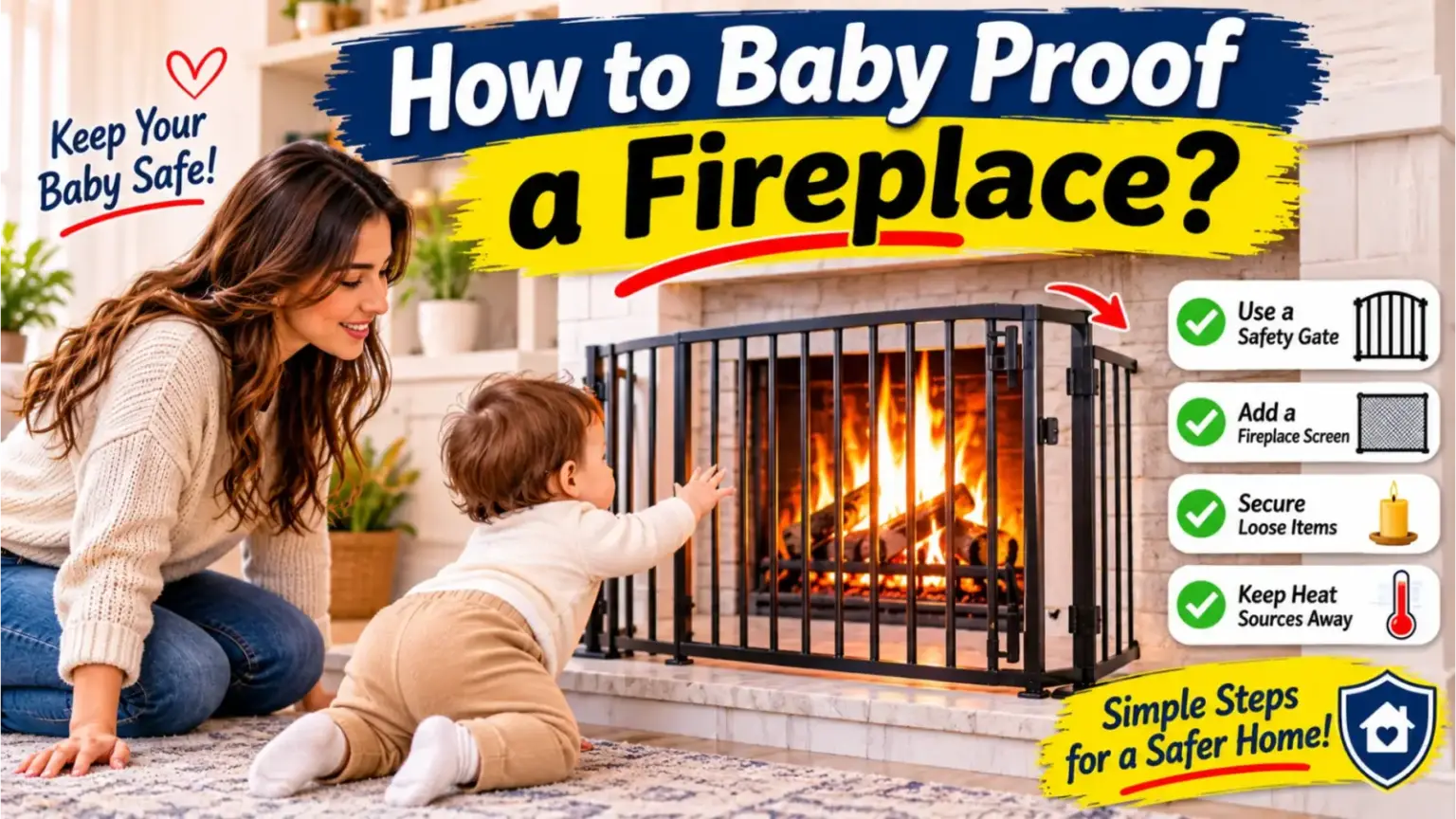
How to Baby Proof a Fireplace: Complete Safety Guide
Here is the short answer on how to baby proof a fireplace. Put up a hardware mounted fireplace safety gate (also called a hearth gate) that blocks the whole firebox and hearth. Add a mesh safety screen if you have a gas fireplace with a glass front. Pad sharp hearth edges, move tools, matches, lighters, and remotes out of reach, and store ashes in a lidded metal can outside. Then keep smoke and carbon monoxide alarms working, and never leave a child alone near a lit fire.
Fireplaces cause two main kinds of injuries in babies and toddlers: burns from fire, embers, and hot glass, and bumps or cuts from falling onto a hard hearth. This guide covers both, for wood burning, gas, electric, and unused fireplaces.
Fireplace Childproofing Checklist
| Hazard | Fix | Priority |
|---|---|---|
| Flames, sparks, hot surfaces | Wall mounted fireplace safety gate | Must have |
| Hot glass on gas fireplace | Mesh safety screen over the glass | Must have |
| Sharp brick or stone hearth | Hearth bumper or edge guard | High |
| Pokers, shovels, matches, lighters | Store high or locked away | High |
| Gas remote, switch, or key valve | Hide, lock, or use child lock feature | High |
| Hot ashes and coals | Lidded metal ash can, stored outside | High |
| Smoke and carbon monoxide | Working alarms on every level | Must have |
| Heavy mantel decor | Remove or secure items | Medium |
| Chimney buildup or blockage | Yearly inspection by a certified sweep | Medium |
Why Fireplaces Are Risky for Babies and Toddlers
Young children are drawn to fire. Flames move, glow, and make noise, so a crawling baby or new walker heads straight for them. Kids this age do not understand “hot,” and their skin burns faster and deeper than adult skin.
Gas fireplaces are often the biggest surprise. The glass front looks like a safe barrier, but it gets extremely hot. Safe Kids Worldwide lists the glass on a gas fireplace at around 500°F, hotter than a hair iron, and warns that a third degree burn can happen in less than one second of contact. The glass can also take more than an hour to cool after you turn the fireplace off.
Other common risks include:
- Falls: raised brick, stone, or marble hearths have hard corners at the perfect height for a toddler’s head.
- Embers and sparks: wood fires pop and throw sparks onto the hearth and floor.
- Ashes: coals can stay hot for days and look like sand to a curious child.
- Tools: pokers and tongs are heavy, sharp, and can heat up.
- Carbon monoxide: a blocked chimney or bad vent can push this invisible gas into your home.
Hazards by Fireplace Type
| Fireplace type | Main dangers | Key baby proofing steps |
|---|---|---|
| Wood burning | Open flame, sparks, embers, hot ash, tools | Gate set well back, spark screen, ash can outside |
| Gas with glass front | Very hot glass, controls, remote | Mesh safety screen, gate, hide remote and key |
| Electric | Warm vents or front, cords, wall unit pulled down | Anchor unit, hide cords, cover outlets, gate if front gets hot |
| Wood or pellet stove | All surfaces get hot, including pipes | Full gate around the stove, hot pad free zone |
| Unused or decorative | Hard hearth, soot, loose bricks, objects inside | Pad edges, cover or block the opening |
Step 1: Install a Fireplace Safety Gate
A gate that keeps your child out of the whole fireplace area is the most important step. It protects against flames, hot glass, the hearth edge, and tools all at once.
How to Choose a Hearth Gate
- Pick a fireplace rated gate: use a hearth gate or configurable gate made for fireplaces, not a pet gate.
- Use hardware mounting: gates that screw into the wall on both sides are much harder for toddlers to push over than pressure mounted gates.
- Look for a walk through door: a self closing, childproof latch lets adults add wood or clean without removing the gate.
- Check safety certification: the CPSC advises using safety gates that meet current child safety standards and never using pet gates as child gates.
- Measure first: measure the hearth width and depth, then add enough panels to create space between the gate and the heat.
How Far Should the Gate Be From the Fire?
There is no single safe distance that fits every home. A wood fire throws sparks and heat, so the gate should sit farther back than it would for a gas unit. The metal gate itself should never get hot to the touch. Follow the setup instructions for both your gate and your fireplace, and test by feeling the gate after the fire has burned for an hour.
Freestanding Stoves and Corner Fireplaces
For a freestanding wood or pellet stove, use a gate that wraps all the way around the stove and pipe. Corner and angled fireplaces may need hinged panels that you can bend to match the walls.
Step 2: Add a Safety Screen to a Gas Fireplace
If your gas fireplace has a glass front, a mesh safety screen is a must. The screen sits in front of the glass and keeps small hands from touching it directly. Many newer gas fireplaces include a screen from the factory, but many older units do not.
- Check yours: look for a fine metal mesh panel in front of the glass.
- Get the right fit: contact the manufacturer or a hearth retailer with your model number for a screen made for your unit.
- Use a gate too: a screen also gets warm. A gate adds distance so your child cannot press against it.
- Think about other homes: fireplaces at relatives’ houses, hotels, and restaurants may not have screens.
Safe Kids Worldwide also urges parents to keep fireplace remotes and on and off switches out of children’s sight and reach. Read the Safe Kids gas fireplace safety sheet for more tips.
Step 3: Pad Sharp Hearth Edges and Corners
Even a cold fireplace can hurt a child. Raised hearths made of brick, stone, slate, tile, or marble have hard edges and corners right where new walkers fall.
| Option | Best for | Notes |
|---|---|---|
| Edge bumper strip | Raised hearths used for fires | Covers the front edge and corners; choose a heat resistant type |
| Corner guards | Small hearths, budget fix | Covers only corners; check adhesive often |
| Full hearth cushion | Fireplaces that are not used | Turns the hearth into a soft bench; never use with a fire |
| Gate only | Busy, frequently used fireplaces | Keeps the child off the hearth entirely |
Safety note: foam padding can melt or burn. If you light fires, keep padding only on edges far from the firebox, or use a product rated for hearth use. Test adhesive on a hidden spot first, especially on marble or natural stone.
Step 4: Remove Tools, Matches, and Lighters
The American Academy of Pediatrics advises putting fireplace tools and accessories out of a young child’s reach and removing lighters and matches. Small hands grab whatever is on the hearth.
- Store pokers, shovels, tongs, and brushes on a high hook or in a closet.
- Keep matches and long lighters in a high, closed cabinet. Child resistant lighters help, but they are not childproof.
- Remove fire starters, fatwood, and lighter cubes from the hearth.
- Keep the gas key, wall switch cover, and remote control out of reach. Use the child lock if your remote has one.
Step 5: Close and Secure Fireplace Doors
Glass fireplace doors and metal mesh screens help keep sparks and embers inside the firebox. They do not replace a gate, because glass doors get hot and a toddler can pull a screen over.
- Keep doors closed when the fireplace is not in use.
- Use a fireplace door lock or appliance latch so a child cannot swing doors open.
- Choose a heavy, wide based screen that will not tip.
Step 6: Handle Firewood and Ashes Safely
Ashes are a hidden burn risk. South Carolina’s state fire marshal notes that coals can stay hot enough to start a fire for up to three days.
- Let ashes cool fully before removing them.
- Scoop them into a metal ash can with a tight lid.
- Store the can outside on a nonflammable surface, away from the house and out of reach of kids.
- Never use paper bags, cardboard, or plastic bins for ashes.
- Keep firewood racks outside the gate or outdoors. Bark, splinters, and insects are not toddler friendly, and stacked logs can roll.
Step 7: Make the Mantel Safe
Children pull on anything that hangs down. A mantel can turn into a climbing target or a source of falling objects.
- Remove heavy decor, glass vases, candles, and picture frames that could fall.
- Skip hanging items like long garlands or stocking holders that a child could yank.
- Secure a TV above the fireplace with a proper wall mount, and hide its cords.
- Never place furniture that a child can climb right next to the hearth.
Step 8: Test Smoke and Carbon Monoxide Alarms
Every home with a fireplace needs working smoke alarms and carbon monoxide alarms. The AAP recommends testing them monthly and changing the batteries at least once a year. Place alarms on every level of the home and near sleeping areas.
Carbon monoxide has no color or smell. Babies and young children breathe faster than adults, which can raise their exposure. If an alarm sounds, get everyone outside and call 911 or your local emergency number.
Step 9: Schedule a Yearly Chimney Inspection
Fire safety groups recommend having your chimney inspected once a year by a certified chimney sweep, and cleaned as needed. The sweep checks for creosote buildup, cracks, and blockages like nests or leaves that can cause chimney fires or push smoke and carbon monoxide inside. A chimney cap helps keep animals and debris out.
How to Childproof an Unused Fireplace
If you do not plan to use the fireplace while your kids are small, you can make it much safer and still keep it looking nice.
- Clean it out: remove old ash, soot, and the grate so there is nothing to play with.
- Block the opening: use a fitted fireplace cover, decorative panel, or a sturdy board. Remove it before ever lighting a fire.
- Pad the whole hearth: a full cushion is safe here because there is no heat.
- Check the chimney: look for loose bricks or drafts and have them repaired.
- Tell everyone: make sure babysitters and family know not to light it.
Electric Fireplace Safety for Kids
Electric fireplaces have no real flame, but they still need attention. Some units blow warm air from a vent, and wall mounted models can be pulled or hit.
- Check the manual to see which parts get warm.
- Mount wall units securely and use the anchoring hardware for freestanding models.
- Hide cords behind furniture or in cord covers, and cover unused outlets.
- Use the child lock if available, and unplug the unit when not in use.
Teach Fire Safety as Your Child Grows
No gadget replaces supervision. Even with every safety product in place, stay in the room while a fire is burning, and put the fire out before bed or leaving the house.
| Age | What to teach |
|---|---|
| Babies | Rely on gates and supervision only |
| Toddlers | Use a simple word like “hot” and redirect every time |
| Preschoolers | Explain that the glass, screen, and hearth can burn even when the fire looks small |
| School age | Teach that only adults light fires and what to do if an alarm sounds |
What to Do if Your Child Gets Burned
- Move your child away from the heat right away.
- Cool the burn under cool (not ice cold) running water.
- Remove tight clothing or jewelry near the burn unless it is stuck to the skin.
- Cover loosely with a clean, dry cloth or sterile bandage.
- Do not put butter, oil, ice, or creams on a fresh burn.
Call 911 or go to the emergency room for burns on the face, hands, feet, or genitals, for large or blistering burns, or if you are unsure. For any burn on a baby, call your pediatrician.
Extra Care During Holidays and Gatherings
Holidays bring more fires, more guests, and more distractions. That is when kids slip past the gate.
- Assign one adult to watch the fireplace area during parties.
- Keep wrapping paper, cards, and boxes away from the hearth, and never burn them in the fireplace.
- Make sure guests close the gate behind them.
- Keep stocking hooks, candles, and decorations off the hearth and out of reach.
Common Fireplace Baby Proofing Mistakes
- Trusting the glass: gas fireplace glass is a burn hazard, not a barrier.
- Using a pressure gate: toddlers can push it over toward the fire.
- Gate too close: a gate that gets hot creates a new burn risk.
- Foam near flames: non rated padding can melt or catch fire.
- Leaving the remote out: toddlers copy adults and press buttons.
- Ashes in the trash: warm coals can start a fire days later.
- Forgetting other homes: grandparents’ and vacation fireplaces need the same caution.
Frequently Asked Questions
What is the best way to baby proof a fireplace?
A hardware mounted fireplace safety gate that blocks the whole hearth is the best single step. Pair it with a mesh screen for gas fireplaces and hearth edge padding.
Can I use a regular baby gate around a fireplace?
A regular gate is usually too short to enclose a hearth and may not be meant for heat. Use a configurable hearth gate made for fireplaces that mounts to the wall.
Is a gas fireplace safe for babies?
It can be, with precautions. Install a safety screen over the glass, add a gate, hide the remote and controls, and supervise closely. The glass stays hot long after the flame goes off.
How long does gas fireplace glass stay hot?
Safe Kids Worldwide notes the glass can take more than an hour to cool down after the fireplace is turned off. Keep the gate up until it is cool.
How do I baby proof a fireplace hearth?
Add a heat resistant edge bumper or corner guards to raised hearths. If you never use the fireplace, a full cushion works well. For active fireplaces, a gate that keeps kids off the hearth is best.
Are fireplace hearth pads safe with a lit fire?
Only products rated for hearth use should be near a working fireplace. Regular foam can melt or catch fire, so keep it far from the firebox or skip it.
Should I stop using my fireplace with a baby?
You do not have to, but many parents use it less during the crawling and toddler years. If you do use it, keep the gate up, stay in the room, and let it cool fully.
Do electric fireplaces need baby proofing?
Yes. Secure the unit, hide cords, cover outlets, and check whether any vents or front panels get warm.
At what age can I remove the fireplace gate?
There is no set age. Many families keep the gate until a child reliably understands and follows fire rules, often in the preschool years. Keep supervising even after the gate comes down.
How do I childproof a fireplace without a gate?
For an unused fireplace, cover the opening and pad the hearth. For one you use, a gate is strongly recommended. Without one, constant supervision is the only safe option.
Final Thoughts
Learning how to baby proof a fireplace is about layers. Start with a sturdy wall mounted gate, add a screen to gas glass, soften hard edges, and clear away tools, matches, remotes, and ashes. Keep smoke and carbon monoxide alarms working and the chimney inspected. Most of all, stay close whenever the fire is on, so your family can enjoy the warmth safely.
Keep reading
 Electrical
How to Wire a 3-Way Switch: Step-by-Step With Diagrams
 HVAC & Air Quality
How Often to Change Air Filter in Your Home HVAC
More in Home Safety →